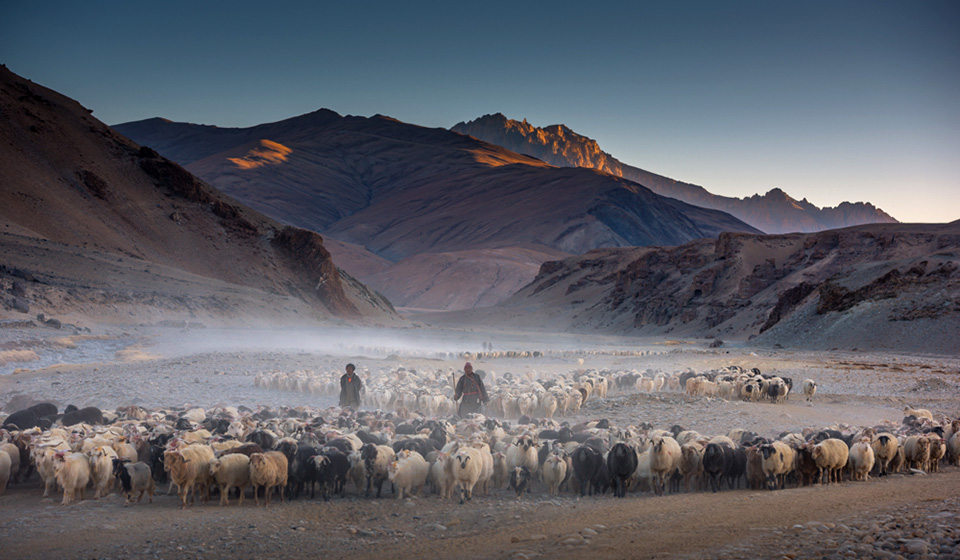
Nomads are the person with no fixed homes, moving place to place to obtain food, finding pastures for their livestock. Most of the nomads mainly lived in tents and they traditionally travel by animals or on foot. These nomadic pastoralists moved with fleet of sheep, herds of goats, camels and cattle. Finding pastures for their cattle was major concern for their constant movement. These nomads moved between summer and winter in order to graze their herds. During winter they move towards low hills as in winter high mountains are covered with snow. In summer they start trekking towards northern mountains as snow melt mountains start converting into thick lush grass. This provides ample pastures for the herds. Just like Gujjars bakarwals from Jammu and Kashmir they move to Siwalik range, low hill areas in winter and by the end of April they began marching to nothern march for summer grazing, Their journey is called kafila. Again they started their journey to their winter base. This systematic movement between summer and winter pastures is same as other communities of the Himalayas, including the Bhotiyas, Sherpas and Kinnauris.
Pastoralists are also found on plateaus, plains and deserts of india. In Maharashtra, Dhangars were an important pastoral community who were mostly, shepherds and blanket weavers.
Raikas from deserts of Rajasthan, they travel suring the monsoons, the raikas of jodhpur and jaisalmer mainly stay in the village, where pasture in easily available for cattle. By October, they moved for search of pasture and for water and again came back in next monsoon.
Pastoral life is not at all easy, it is host my many factors like how much time herd are comfortable on one area, they have to figured out the timing for the movement and make sure they cover their destinations one time and they have to set their realtionship with the local farmers on the way so that cattle could graze in harvested field.
Colonial rule completely changed pastoral nomads life. There movements was regulated and their revenue increased. This happen due to many reasons, waste land rule was enacted in various countries, under this rule uncultivated land was taken over and were given to selected individuals.
Forest act was also major reason in various provinces, under this act forest was classified into 2 parts reserved and protected, and pastoralists entry got restricted to many forest. Other reason was taxation, taxation was imposed on the land, on water, on salt and even on the animals and after some time government started collecting grazing taxes from them.
Due to these measures, there was short of pastures. Soon grazing land start converting into cultivated fields, which causes decline for grazing field. This in turn creates shortage for animals and for livestock.
Pastoralists reacted in many ways, they reduced the number of cattle and some richer pastoralists brought land and settled down and this cause giving up their nomadic life. On the other hand, poor pastoralists lend money from the moneylenders and survive and started working in trading. New laws forced them to alter their lives.
Pastoral communities were effected difficultly in different countries. Their movement was affected by new rules and regulations and find it difficult for grazing and for posture. During the time of droughts and floods cattle die in large number and this made them survival more bitter.
Its not about life full of discomfort, its ways of creating comfort.
 Site Title